A monthly Instagram competitor report should compare clearly defined post cohorts and explain when their metrics were observed. Save each reporting snapshot, retain the source links, and separate publication-month findings from changes between observation dates. If the evidence covers only a recent sample, report that limitation instead of filling the missing month with assumptions.
Use the account comparison tool for an initial peer view and the competitor report template for the written handoff. This guide describes a manual reporting process; it does not depend on automatic account monitoring.
Decide which monthly question the report answers
Choose one or two decisions that recur: whether to continue a content theme, commission a new format or investigate a launch pattern. Keep the competitor selection stable enough to compare periods. If you add or remove an account, explain the change before presenting a new total.
Define the publication window in a named timezone. For example, August 1 through August 31 in America/Los_Angeles is a calendar-month cohort. “The latest 12 returned posts” is a different selection that might span a few days or several months. Either can be useful, but only the former represents the chosen publication month when coverage is adequate.
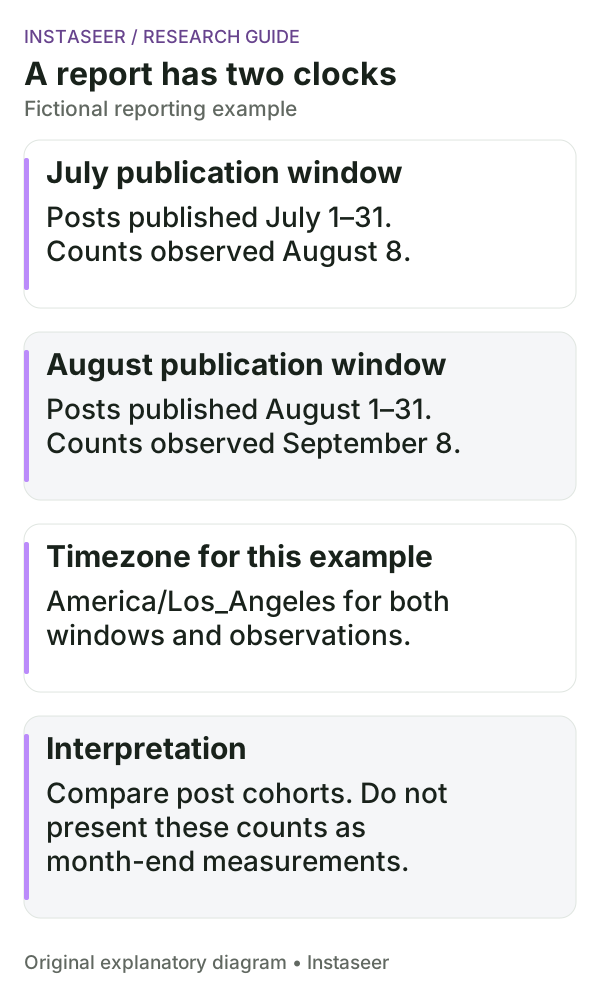
Keep publication dates and observation dates separate
A post published in July can accumulate interactions long after July ends. Its count observed on August 8 is an August 8 observation of a July post. Do not label it “engagement earned in July” unless you have measurements that isolate that interval.
In the fictional diagram, July posts were observed August 8 and August posts were observed September 8, both in America/Los_Angeles. This consistent reporting lag helps organize the process, but does not give every post equal time to accumulate interactions. Early-month posts are still older than late-month posts within each capture.
Preserve the original capture rather than reopening last month’s sources and silently replacing their values. If you intentionally refresh an older cohort, keep both versions and say that the newer capture includes additional elapsed time. Otherwise a revised count can masquerade as a change in content strategy.
Check coverage before calculating cadence
The current Instaseer free tools describe up to 25 returned posts per account, with possible pinned content and incomplete metrics. That is useful recent evidence, but not proof of a complete month. You may need a broader, verified collection to answer a monthly question.
For a verified complete window, define cadence as the number of unique posts published in the window divided by its duration. A fictional 12 posts across a complete 30-day window equals 0.4 posts per day, or 2.8 per seven days. Those numbers describe publication frequency, not a recommended target.
If only 12 returned posts were captured and coverage is uncertain, state “12 posts captured in the selected window.” An empty date in that sample does not prove the account published nothing. Mark an incomplete current month separately and avoid comparing its total with a complete previous month.
Use one metric definition across both periods
For visible interactions, require both likes and comments and show the eligible count in each period. Compare formats separately if the format mix changed substantially. Keep views outside a likes-plus-comments total, and do not interpret public interactions as unique reach or revenue.
| Review field | July cohort | August cohort |
|---|---|---|
| Selected carousels | 8 | 10 |
| Eligible for likes + comments | 7 | 8 |
| Missing required fields | 1 | 2 |
| Observation | Aug 8, 2026 | Sep 8, 2026 |
Both observations in this fictional table use America/Los_Angeles. A change in eligible count is part of the finding: an average over eight eligible posts is not an average over all ten selected posts. Attach the actual source values when you calculate the median or mean so the next reviewer can reproduce it.
Calculate follower changes only from retained observations
Suppose a fictional account has 10,000 followers observed on August 8, 2026 and 10,300 observed on September 8, both in America/Los_Angeles. The observed difference is 300; the relative change is 300 ÷ 10,000 × 100 = 3%.
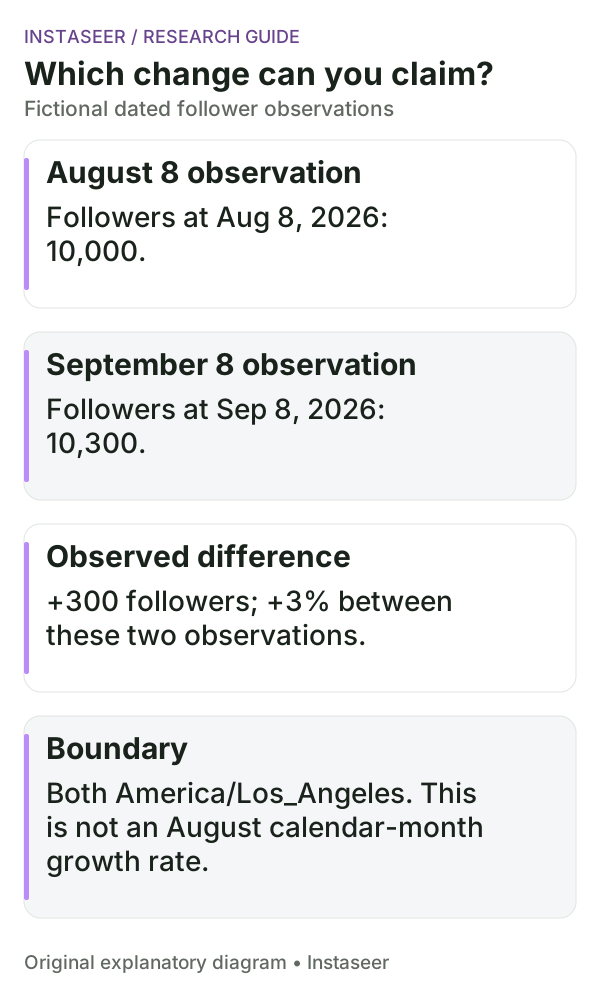
Label that as change between the two observation dates. It is not an August calendar-month growth rate, and it does not reveal when the changes occurred or which posts caused them. A missing earlier snapshot means the comparison is unavailable. An undated manual count stays labeled Follower count; it cannot be assigned a convenient month-end date.
Write the report around decisions and exceptions
Begin with the most useful observed change, then explain the scope and evidence. If a new theme appears, link representative posts. If a summary moves because of one outlier, show that exception rather than attributing the entire movement to a strategy shift.
Reporting question:
Accounts and selection changes:
Publication window and timezone:
Observation dates for each account:
Coverage: complete / partial / unknown, with reason:
Metric definitions and eligible counts:
Finding 1, supporting source posts and limitations:
Finding 2, supporting source posts and limitations:
Decision: continue / test / investigate / insufficient evidence:
Owner and next review date:
For example: “First-visit explanations appeared in three August carousels and one July carousel within our selected evidence. We will brief an original explainer and review the client’s own enquiries.” That is more useful than “The competitor grew because of education content,” which requires evidence the post inventory cannot supply.
Before you send the monthly report
- Confirm that every month label refers to the declared publication window.
- Retain observation dates and timezone labels beside captured metrics.
- Explain changed accounts, incomplete windows and missing fields.
- Check calculations against the eligible post list.
- Include typical source examples and material exceptions.
- Give the client a decision, an owner and a next review date.
If the current evidence is too narrow, the correct monthly finding may be “insufficient coverage for a month-to-month conclusion.” Use the posting-frequency analyzer to inspect the returned posting rhythm, then make the scope of the final report explicit.