To research Instagram collab posts, verify the co-authors on each source post, count unique posts, and record which creators appear in relevant collaborations. Then shortlist creators using the actual content and the client’s objective. A tag, mention or high interaction count does not establish a paid partnership or audience fit.
Start with a public brand account in the Instagram account analyzer, or inspect the saved report example. Use the source posts to verify authorship before carrying a report label into your research notes.
What is an Instagram collab post?
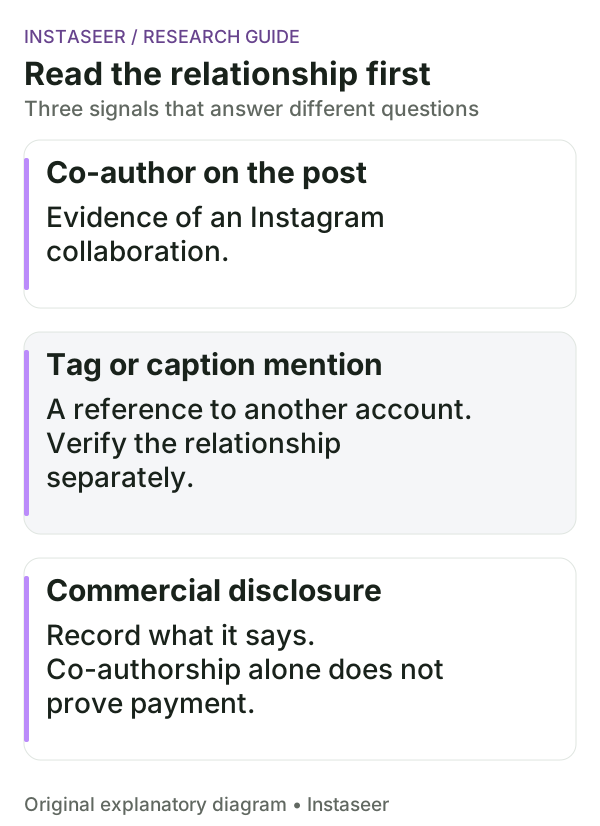
An Instagram collab post is co-authored content associated with participating accounts. Meta’s introduction to Collabs describes co-authoring feed posts, carousels and Reels. For research, the useful distinction is the displayed authorship relationship, rather than whether a creator merely appears in the picture.
A caption mention can identify someone worth investigating, but it is not the same evidence as a co-author. Commercial disclosures answer another question. Record any visible disclosure exactly in your private notes and describe only what it establishes. Do not label every co-authored post “paid influencer content.”
1. Choose a collaboration question
Start with a question such as “Which local creators explain the first visit?” or “How do brands show a new product in use?” These questions give you a reason to examine both the relationship and the creative. “Who has the most followers?” usually leaves too much of the actual brief unanswered.
Choose a publication window and a small set of relevant brand accounts. Keep the observation date and timezone for each capture. If you use a recent free sample, the current Instaseer pages describe up to 25 returned posts, possible pinned content and incomplete metrics. Call it a returned sample, not a complete collaboration history.
2. Build a source-post ledger
Use one row per unique source post. If the same post appears while reviewing two accounts, retain one post record and attach both account relationships to it. A canonical source URL or stable post identifier helps with deduplication.
| Field | Purpose |
|---|---|
| Source URL and publication date | Identify the post and place it in the selected window. |
| Observation date and timezone | Explain when authorship and counts were inspected. |
| Displayed co-authors | Record the accounts visibly sharing authorship. |
| Tag, mention or disclosure | Keep other relationship evidence separate. |
| Format and role | Describe whether the creator demonstrates, explains, reacts or appears. |
| Eligibility and uncertainty | Record missing metrics or unclear authorship without guessing. |
Open the post when a report label is ambiguous. If the source is inaccessible or authorship cannot be confirmed, label the row “unverified” and exclude it from a confirmed-collaboration count. Keep the reference for follow-up if its content remains useful.
3. Count unique posts before comparing creator activity
Imagine a fictional four-post set. Post A is co-authored by a brand and Maya. Post B has the brand, Maya and Lee. Post C has the brand and Lee. Post D is authored by the brand and tags Noor in the caption. That gives three verified collab posts, two observed collaborating creators, and one separate tagged-only lead.
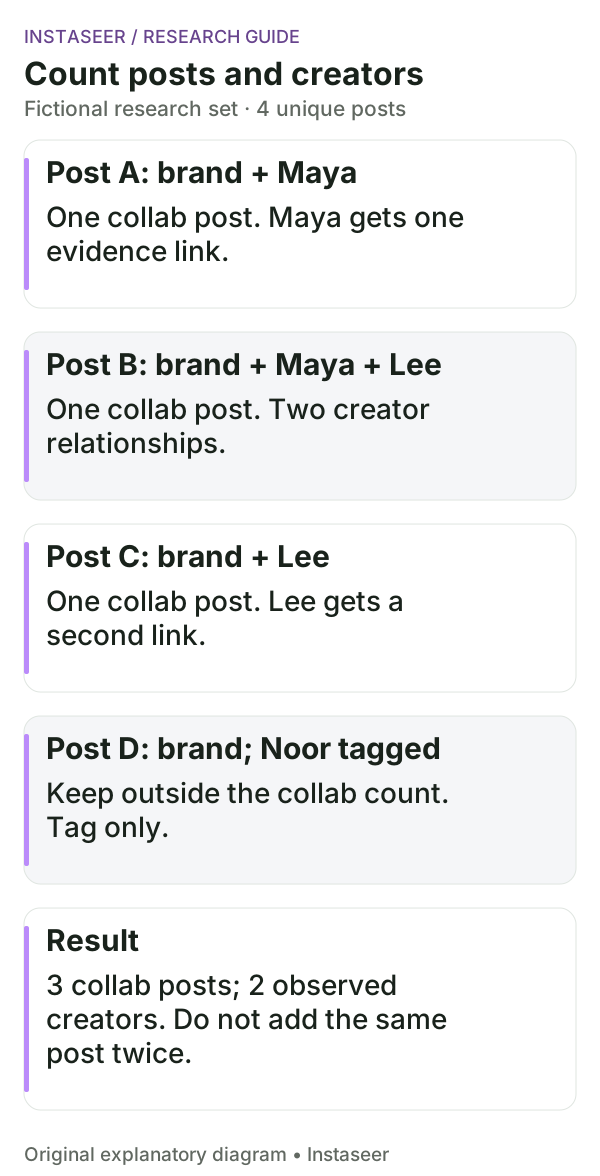
Maya and Lee each appear in two collaboration relationships. Adding those relationship counts gives four, but the underlying set still contains only three collab posts. Likewise, counting Post B’s interactions once under Maya and again under Lee would duplicate them in a combined total. Label the unit before adding anything.
4. Read what the creator contributed
For each verified example, describe the creator’s visible role. Did they demonstrate the product, explain a choice, introduce a location, interview someone or simply appear? Then record one specific reason that role fits the intended brief.
A useful note says, “Explains where to park and what a first visit involves; source post linked.” “Great local engagement” is harder to audit and may imply an audience location you have not verified. A creator discussing a city is evidence of relevant content, not proof that most followers live there.
If comparing response, group similar formats and publication periods. State the eligible count for likes plus comments, and keep missing components out of that calculation. Review typical examples alongside standout posts. You cannot add collaborators’ follower counts to estimate unique campaign reach because audience overlap and actual delivery are unknown.
5. Build a shortlist that carries its unknowns
Shortlist a creator when you can point to relevant evidence and explain the next question to resolve. A small shortlist with strong notes is more useful than a long ranking assembled from follower counts.
Creator / public handle:
Relevant source posts:
Observed role in the content:
Why this fits our audience problem:
Possible original collaboration idea:
Public evidence limitations:
Questions for the creator before commissioning:
Next step / owner:
In the fictional example, Maya could be a lead for a first-visit explainer if her linked content demonstrates clear local guidance. Lee might fit a product demonstration. Noor remains a separate research lead because a tag alone did not establish collaboration. None of these fictional classifications confirms availability, price, audience composition or permission to reuse content.
Common questions when researching collaborations
Can a collab post prove a paid partnership?
No. Co-authorship establishes the observed collaboration relationship. Record separate disclosures and seek direct confirmation of commercial terms when needed. Avoid filling in payment or attribution from a co-author label.
Should we reuse a successful creator post?
Use the source link as research evidence. Reuse rights are a separate question for the rights holder; finding a post does not establish permission. Brief an original concept or confirm the proposed use before production.
What if the goal is to create or troubleshoot a collab post?
This guide covers research and shortlisting. For current publishing eligibility and controls, use Instagram’s in-app help. Do not assume that a research tool can invite collaborators or change a post’s authorship.
Next, review the brand and a relevant peer with the two-account comparison tool. Keep the creator shortlist attached to its source posts so the team can understand both the opportunity and the unanswered questions.