Vet an Instagram influencer by checking whether their published work fits your campaign brief, then build a shortlist with source examples and questions to resolve before commissioning. Start with topic and creative fit, compare visible interaction counts in a consistent sample, and record unknowns such as audience demographics, availability, price and usage rights.
Start with the Instagram account analyzer to organize an initial public-account review. Treat that review as the beginning of selection: a strong shortlist gives the decision-maker evidence and useful questions for each candidate.
Write the assignment before evaluating the creator
Define what the creator must make and who it should help. “An approachable walkthrough for first-time visitors” is a different assignment from “a polished product photograph.” Specify the format, language, relevant location, production needs and intended use. If some of these are undecided, record that rather than silently judging candidates against different briefs.
Choose a few observable criteria. For a beginner tutorial, those might be a clear demonstration, understandable explanation and ability to show the product in context. Follower count can add scale context later; it is not a substitute for demonstrating the required skill.
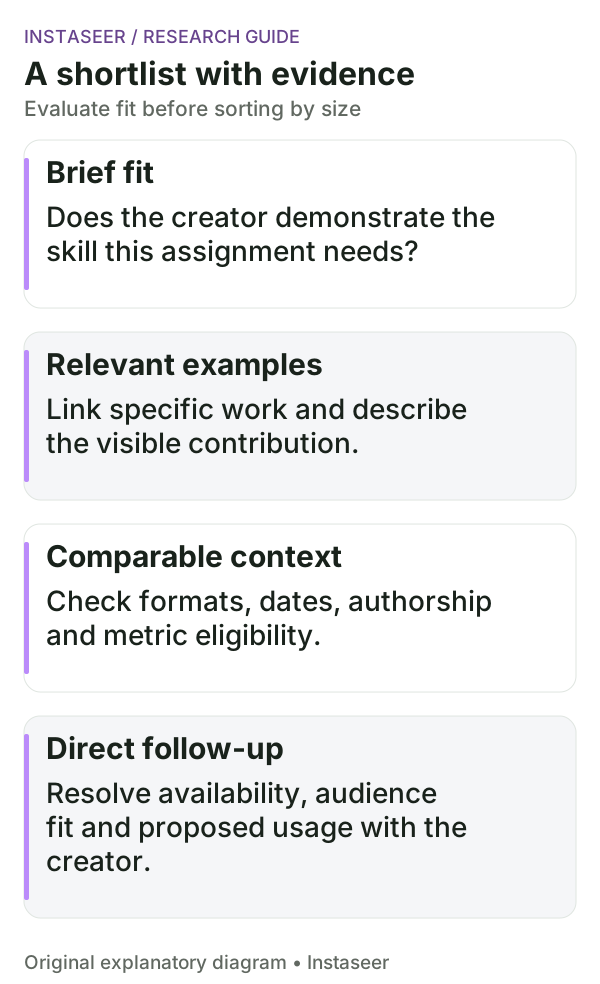
What should you check before shortlisting an Instagram influencer?
Open several relevant source posts, including typical work rather than only a pinned showcase. Record the public handle, source URL, publication date and what the creator visibly contributed. “Explains three setup steps while showing the product” is more useful than “high-quality content.”
Separate authorship from appearance. A creator may be a co-author, a tagged participant or someone pictured in brand-owned content. When the relationship is unclear, mark it as unclear. Do not assume the creator wrote, filmed and edited the entire piece just because their handle appears nearby.
Inspect whether the examples resemble the planned assignment. A strong travel montage does not automatically demonstrate clear instructional delivery. Conversely, a smaller account with consistently relevant tutorials may merit a conversation even when its public counts are modest.
Read engagement as context, with its limitations
Choose comparable formats and publication periods. Record the observation date and timezone; posts of different ages have had different amounts of time to accumulate responses. For combined visible interactions, require both likes and comments and show the eligible count. Missing comments are not zero comments.
Consider a fictional comparison in which one candidate has six selected tutorial Reels but only four with both required fields, while another has six selected and all six eligible. An average for the first candidate describes four posts, not six. A large difference in results might reflect missing data, a single exception or unlike topics, so inspect source examples before ranking candidates.
The current Instaseer free tools describe up to 25 returned posts, possible pinned content and incomplete metrics. Such a sample does not establish a creator’s long-term consistency. Visible interactions also do not reveal how many target customers saw the work or whether they purchased anything.
Keep evidence and unknowns in separate fields
A useful shortlist prevents assumptions from becoming facts as the document moves between teammates. Put the strongest source-backed reason for considering the creator next to the most important unanswered question.
| Public observation | Separate question to resolve |
|---|---|
| A clear tutorial in the needed language. | Can the creator deliver the proposed scope and deadline? |
| Several posts about the relevant city. | Does the audience location fit the campaign? |
| An observed brand collaboration. | What work did the creator perform, and what restrictions apply? |
| Dated likes and comments on selected posts. | What relevant first-party performance evidence can the creator share? |
| A publicly available video. | What permission covers the planned placement and use? |
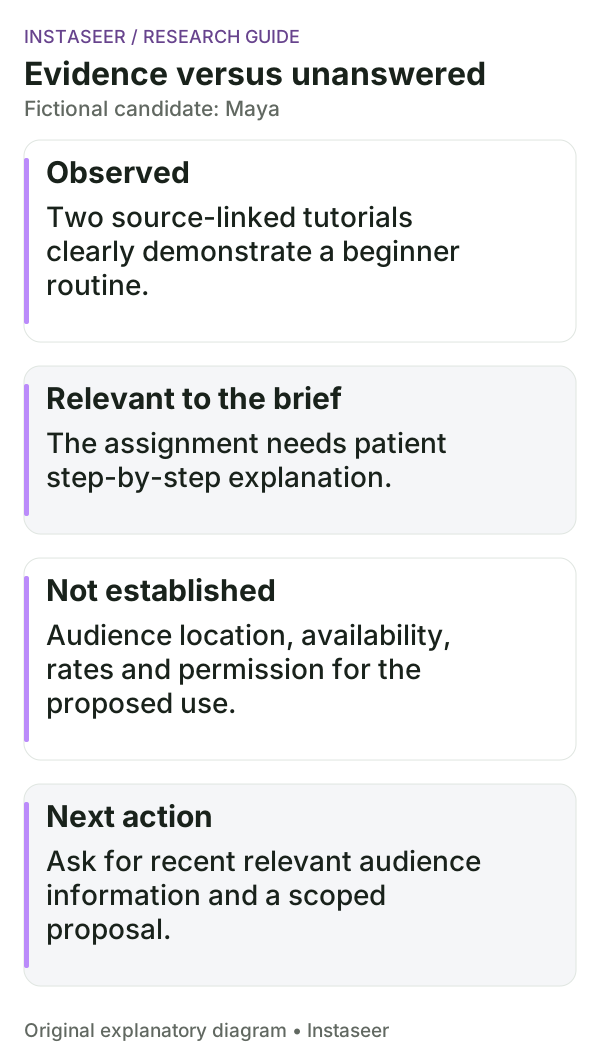
Use decision categories rather than a false precision score
For an initial shortlist, “advance,” “request evidence” and “hold” can be more honest than a weighted score whose inputs are guesses. Explain each decision in a sentence. Apply the same criteria across candidates, and keep a record of material changes to the brief.
In the fictional Maya example, two relevant tutorials justify requesting a proposal for a beginner explainer. Audience location and commercial terms remain unresolved. Another candidate might be held because the available work does not demonstrate instruction, even if their follower count is larger. Neither decision is a judgment about the person’s general quality.
Prepare the follow-up questions
Once a candidate fits the creative brief, prepare a scoped request covering the deliverables, timing, intended placements and relevant audience or performance information. Ask for information that matters to the decision rather than collecting an entire analytics account. Keep creator-supplied metrics labeled with their source, period and definitions.
Discuss the proposed usage and confirm the terms before assuming an existing post can be repurposed. Record any deliverables that need separate pricing or permission. This guide is a research worksheet, not a contract template; the practical aim is to prevent unresolved terms from disappearing inside a recommendation.
Creator shortlist card
Handle and profile link:
Assignment and required skill:
Relevant source posts:
Observed contribution in each example:
Observation date/timezone and public metric scope:
Reason to advance / request evidence / hold:
Unknowns that affect the decision:
Questions for the creator:
Owner and next review date:
Can public research detect fake followers?
Unusual patterns can justify closer review, but this workflow cannot certify authenticity or diagnose manipulation from a public sample. Avoid turning a surprising count into an accusation. Ask for relevant evidence, inspect the context and state the limits of what was observed.
Review a creator’s public Instagram posts to gather consistently scoped examples. Use the shortlist worksheet to explain the fit and record what still needs confirmation before commissioning.