Compare creator and brand Instagram posts by defining authorship categories, deduplicating source posts and matching formats and publication windows. Keep collaboration posts separate and show the eligible count for each metric. Observed authorship does not establish who produced the asset, whether a creator was paid or whether the brand can reuse the content.
Start with the Instagram account comparison tool for public evidence, then apply the manual classification rules below to the source posts. The goal is a defensible content comparison, not a universal verdict that one type always works better.
What is the difference between creator content, brand content and UGC?
For this research worksheet, “creator-only” and “brand-only” describe the observed publishing accounts. UGC is commonly used for user-generated content, but public posts alone may not reveal whether material was spontaneous, commissioned or reused with permission. Treat production origin and commercial status as separate fields.
A brand-published video can feature a customer or creator. A creator-published post can be commissioned by a brand. A co-authored post can appear in both accounts’ evidence. None of those facts can be reliably reduced to “person in the frame means organic UGC.” Define the terms before assigning labels.
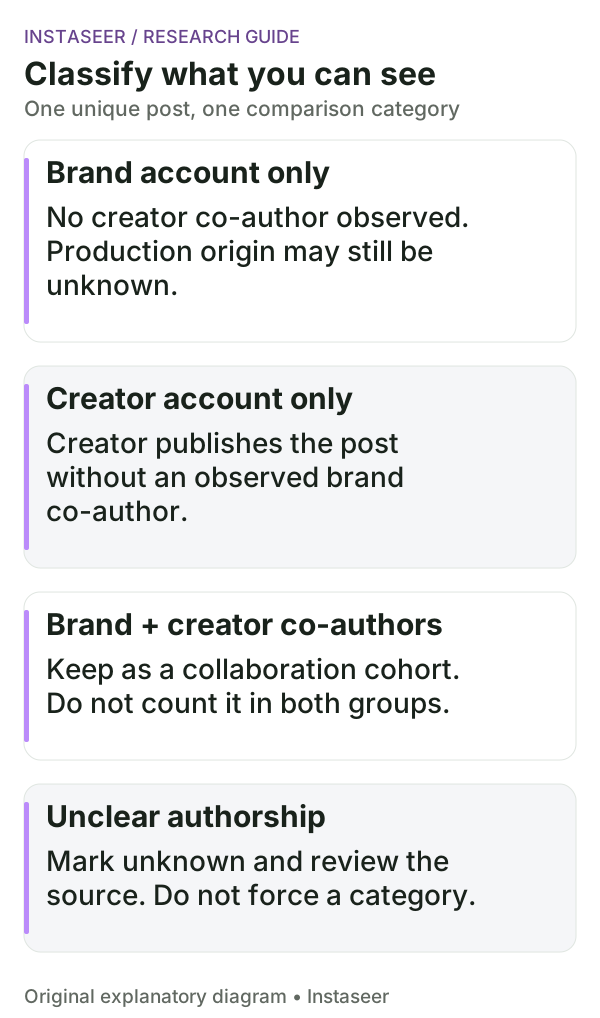
Use mutually exclusive authorship categories
Apply the same decision rule to each unique source post. First, check whether a brand and creator are both visibly listed as co-authors. If so, use the collaboration category. Otherwise classify by the observed publishing account, retaining an unknown category when the evidence is insufficient.
| Category | Include when | Do not assume |
|---|---|---|
| Brand-only | The brand publishes without an observed creator co-author. | The brand produced every asset in-house. |
| Creator-only | The creator publishes without an observed brand co-author. | The post is unpaid or independent. |
| Collaboration | A brand and creator visibly share authorship. | Payment, unique reach or reuse permission. |
| Unknown | Authorship or account role cannot be confirmed. | A missing label establishes a relationship. |
Meta’s Collabs introduction explains the co-authoring concept. Verify the actual source post rather than treating a caption tag as the same relationship. Record tags and disclosures separately when they help interpret the content.
Compare a consistent set of posts
Choose the business question, accounts, publication window and format before examining which group has the largest numbers. Keep the observation date and timezone for every account. Match content purpose where practical: a routine tutorial and a giveaway announcement may not support the same inference even if both are carousels.
Use a unique source URL or post identifier to remove duplicate records. A co-authored post appearing in two account collections remains one post in the combined analysis. Keep it out of both exclusive brand-only and creator-only groups.
The current Instaseer free comparison describes up to 12 returned posts per account, possible pinned content and incomplete metrics. Such a sample is not necessarily a complete campaign inventory. If you need all campaign posts, verify that coverage separately and preserve gaps rather than inferring missing items.
A fictional comparison with explicit eligibility
Imagine 14 selected carousels across the three known authorship groups. All were published August 18–31, 2026 and observed September 8, 2026 in UTC. One post in each group lacks a required interaction field, leaving 11 eligible posts. Visible interactions mean likes plus comments.
| Group | Eligible values | Eligible / selected | Median |
|---|---|---|---|
| Brand-only | 40, 50, 60, 70, 80 | 5 / 6 | 60 |
| Creator-only | 60, 80, 100, 120 | 4 / 5 | 90 |
| Collaboration | 90, 150 | 2 / 3 | 120 |
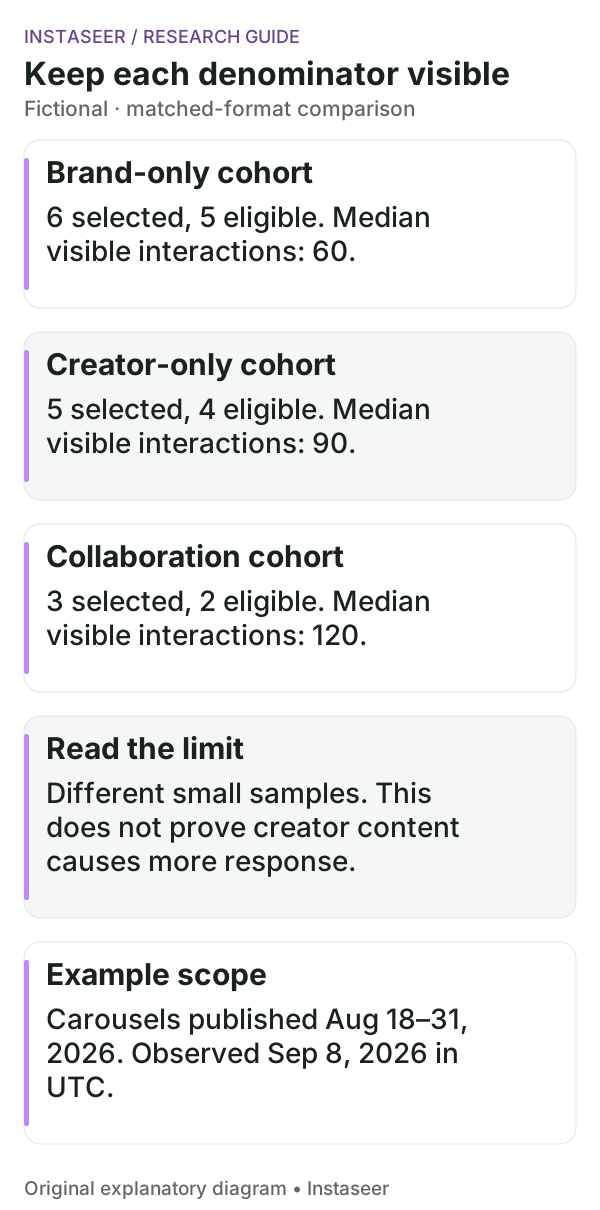
The collaboration median is the mean of its middle pair: (90 + 150) ÷ 2 = 120. The creator-only median is (80 + 100) ÷ 2 = 90. Missing fields do not become zero-valued posts in either calculation.
The correct description is that the selected collaboration cohort has the highest median in this fictional sample. With only two eligible collaboration posts, you cannot treat that as a reliable campaign expectation. Audience scale, creative, offers, distribution and post age can all affect the comparison.
Inspect what differs in the content
Open typical source examples from each cohort and note the creator’s visible role, the explanation, setting and next action. A collaboration may provide a first-person demonstration, while a brand-only post explains specifications. That difference can be useful for a brief, but it is not evidence that the authorship label caused the response.
Keep separate columns for visible production style, observed authorship and confirmed origin if the client supplies it. A polished creator video and an informal brand video show why publication identity and visual style should not be treated as interchangeable categories.
Turn the comparison into an original test
Choose a specific communication idea to test, such as a first-person demonstration alongside a product explanation. Confirm the actual production arrangement, permissions and deliverables with the participants. Use the client’s own authorized outcome data for the test and keep it distinct from the public competitor counts.
Authorship comparison worksheet
Question and selected accounts:
Publication window / observation dates and timezones:
Unique source post:
Observed authorship category and evidence:
Production origin: confirmed / unknown:
Visible format, topic, offer and creator role:
Metric eligibility and missing fields:
Cohort counts and calculation:
Interpretation and alternative explanation:
Original test and required confirmations:
Does this show whether UGC outperforms brand content?
It shows differences within the declared public sample and definitions. It does not establish a universal UGC advantage, production origin or causal effect. Use the competitor report template to carry the categories, denominators and source evidence into the final brief, so the team can act without losing those distinctions.