Research a competitor’s Instagram product launch by building a timeline of source posts, recording when each post was published and when you observed it, and separating visible announcements from interpretations. Public posts can show messaging, formats and sequencing. They cannot establish sales, conversion rates, inventory levels or the team’s private strategy.
Use the Instagram account analyzer as a starting point for public evidence. Then verify relevant source posts and build the manual launch worksheet below. A recent returned-post sample may miss an older teaser or part of the campaign, so treat completeness as something to check.
Start with a specific launch question
Choose one decision the research should support: how to explain a new use case, when to introduce product details, or what questions a demonstration needs to answer. “Why was their launch successful?” assumes a result you may not be able to observe. A more useful question is “How did this account explain the product before and after its announced release?”
Record the exact account identity, product name, market context and proposed publication window. Keep similar products or regional accounts separate. A product announcement, restock, new color and new market entry can look similar in a feed while representing different events.
Build a timeline with two kinds of dates
For each unique source post, record its publication timestamp in an explicit timezone and the timestamp of your observation. Add the release date only when a source actually states it. Label an inferred date as an inference rather than silently using the earliest post you found.
The fictional sequence below uses America/Los_Angeles for the whole example. It contains four posts published in August 2026, all inspected September 8, 2026. A teammate reading the timeline later should be able to distinguish what happened in August from what was visible during the September inspection.
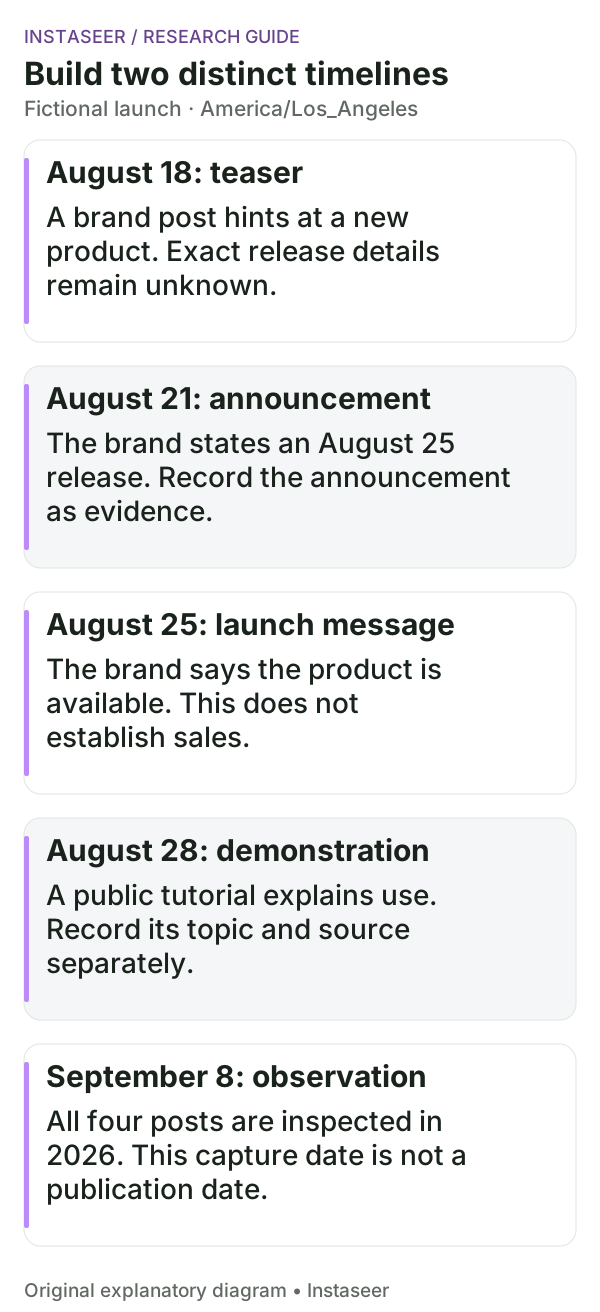
| Publication date | Observed message | What remains unknown |
|---|---|---|
| August 18, 2026 | Teaser hints at a new product. | Exact release date and full campaign scope. |
| August 21, 2026 | Announcement states an August 25 release. | Whether the planned release happened as described. |
| August 25, 2026 | Launch post says the product is available. | Sales volume, stock and checkout completion. |
| August 28, 2026 | Demonstration explains a use case. | Whether viewers understood it or purchased. |
These illustrative entries have no real source URLs. In an actual worksheet, attach the original post URL to every row. If a post was edited, record the wording visible at your observation time; do not describe it as the original wording unless you have evidence of that earlier version.
Check the campaign coverage before counting
Search the declared account and window for relevant posts, including announcements and follow-up explanations. Record which surfaces you could inspect. Unavailable Stories, deleted posts and uncaptured material are coverage gaps, not zero activity.
The current free Instaseer comparison describes up to 12 returned posts per account, possible pinned content and incomplete metrics. That returned set is not automatically a complete launch archive. Pinned positions do not establish publication order. Sort your timeline using the publication evidence and keep an explicit “coverage incomplete” note when appropriate.
Deduplicate co-authored posts by their unique source URL or identifier. A collaboration found through both the brand and creator is still one unique post in the combined timeline. Keep authorship visible so a brand-only count and a combined campaign count cannot be confused.
Describe the messages before ranking the numbers
Classify each post by its observed purpose: teaser, product explanation, release announcement, demonstration or follow-up question. Use an unknown category when the purpose is ambiguous. Record format, opening message, visible offer and next action without claiming to know the creator’s intent.
Look for unanswered buyer questions. Does the announcement explain who the product is for? Does the demonstration show a realistic use case? Are availability and limitations clear? Those observations can guide your own brief even when you cannot compare performance fairly.
Read launch engagement with the right limits
If comparing visible interactions, use likes plus comments only when both fields are available. Show eligible and selected post counts and preserve missing values. Compare similar formats and note how old each post was when inspected. In the fictional timeline, the August 18 teaser had more time to accumulate interactions than the August 28 demonstration at the same September 8 observation.
A high comment count may reflect questions, confusion, a giveaway or enthusiasm. Inspect the visible context before naming a pattern. Neither comments nor a launch-day spike establish purchases. Even a public “sold out” statement is a statement by the account; it does not disclose starting stock or audited demand.
Turn the sequence into an original launch plan
Choose one observed communication pattern and write a possible explanation plus an alternative. For example, an early use-case demonstration might help buyers understand the product; it could also be a routine content format unrelated to a deliberate launch sequence. Keep both possibilities in the research notes.
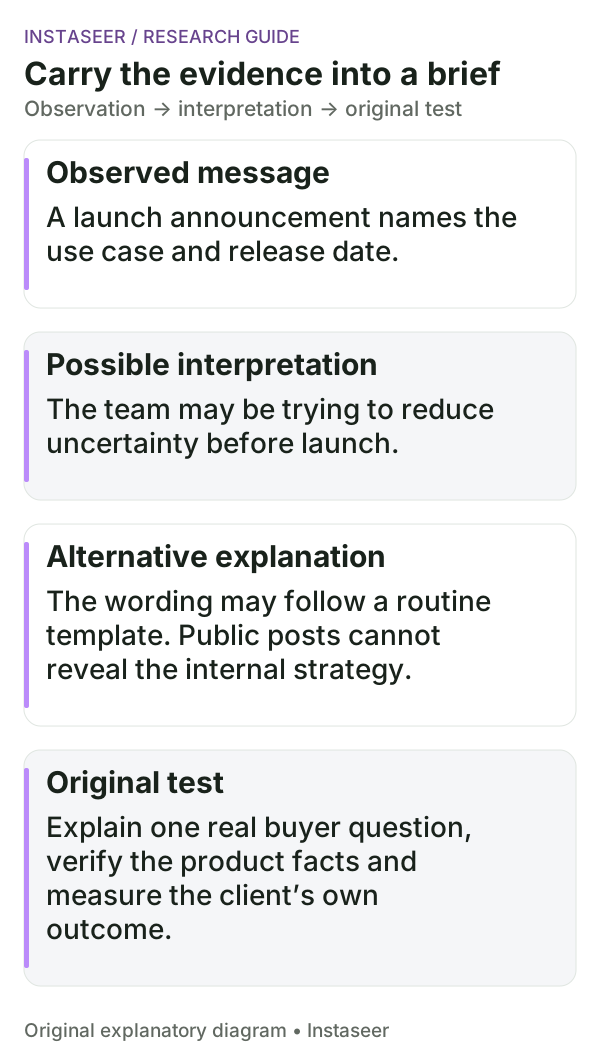
Build the client’s plan from verified product facts, real production capacity and a clear audience question. Assign an owner, a publication window and an outcome the client can actually measure. Use authorized first-party results to evaluate the client’s launch, keeping those results separate from public competitor observations.
Launch research worksheet
Question / account / product / market:
Publication window and timezone:
Observation timestamp and timezone:
Unique source post URL:
Publication timestamp / stated release date:
Observed message, format and next action:
Authorship / duplicate check:
Metric eligibility and post age:
Missing surfaces or coverage limits:
Interpretation / alternative explanation:
Original idea / verified facts / owner:
Client outcome and measurement window:
Can you tell whether a competitor launch worked?
You can describe what the declared public evidence shows: messages, timing, visible responses and gaps. You cannot infer the competitor’s commercial result from those observations alone. Use the competitor report template to present the timeline, sources and limitations alongside a practical recommendation for your own launch.