For an agency, Instagram competitor analysis should produce a client decision someone can check. Start with the client and one relevant competitor, compare a clearly defined set of public posts, open the evidence, and turn the findings into three proposed tests. Keep collection dates, missing metrics and alternative explanations visible in the brief.
You can start with the Instagram account comparison tool. This guide covers the Instagram part of a social media competitive analysis; repeat the scope-setting process separately for other platforms instead of combining unlike metrics.
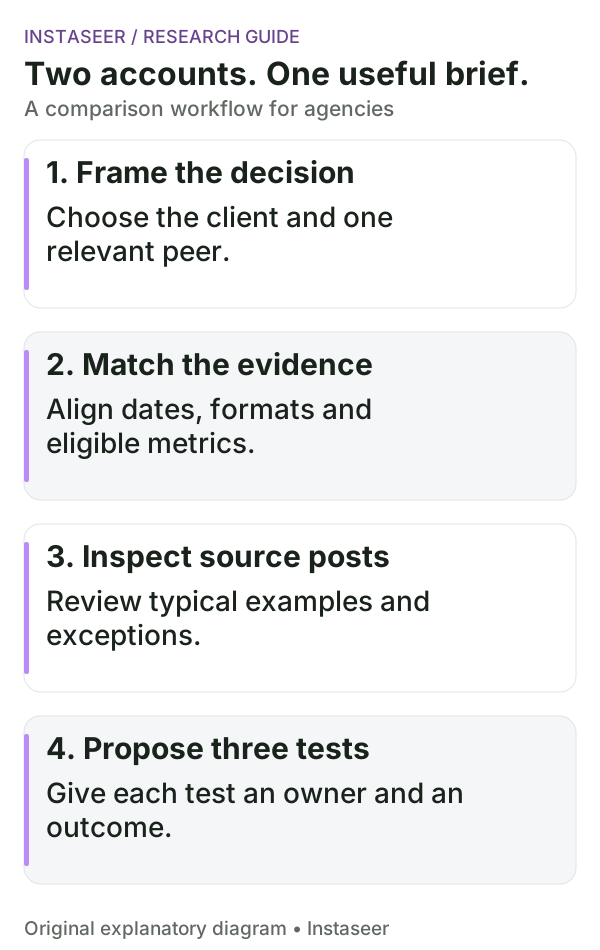
1. Define the decision before choosing the competitor
Write one question that affects the next month of work. “What should we publish?” is too broad. “Which questions should our first-visit content answer before someone books a trial?” gives the analyst, strategist and client a shared objective.
Choose a competitor that serves a similar customer need, market and offer. A neighborhood fitness studio and a national sportswear brand may both post workouts, but their content supports different decisions. Use the sportswear brand as a separately labeled creative reference if it helps; keep it outside the peer benchmark.
Record why the peer belongs in the comparison. Include the account handle, public profile link, offer, geography when relevant, and one sentence connecting it to the client question. A follower count alone is a weak reason to select a peer.
2. Capture two accounts and write down the scope
Open the Instaseer account comparison tool and follow its displayed controls to select two public accounts. Check the scope and observation labels in the returned results before comparing them. Product controls can change; the research method below applies to the evidence actually returned.
The free check returns up to 25 posts per account. It may return fewer posts, pinned content or incomplete metrics. Successful live snapshots can be reused for up to 24 hours. Treat the displayed observation date as the date of the evidence; opening the page again does not necessarily create a new observation.
Keep a short scope note beside the results. Record each account's observation date and timezone separately, the returned count, the publication dates represented, formats included, and any selection you make. If you narrow the selection manually, preserve the original returned count as well as your selected count.
| Field | What to record |
|---|---|
| Observation | The displayed capture date and timezone for that account. |
| Coverage | Returned posts, selected posts and their publication window. |
| Eligibility | Posts with both likes and comments available for combined interactions. |
| Comparison rule | Matching formats, comparable recency and the same metric formula. |
| Known gaps | Missing fields, pinned older posts or an incomplete window. |
3. Compare equivalent evidence before ranking accounts
For visible interactions, use likes plus comments only when both values are available. An unavailable comment count is not zero. Report the eligible count with every average or median. Keep views separate unless their definition and availability are comparable for the selected posts.
Here is a fictional example. Both accounts were observed on September 8, 2026 in America/Los_Angeles. The analyst selected carousels published August 18–31. Studio A returned 12 posts, of which six matched the selection and five had complete interaction fields. Studio B returned 10 posts, with five selected and all five eligible.
| Account | Eligible values | Median | Mean |
|---|---|---|---|
| Studio A | 30, 40, 50, 60, 320 | 50 | 100 |
| Studio B | 45, 55, 65, 75, 85 | 65 | 65 |
Studio A has the higher mean because of one 320-interaction post; Studio B has the higher median in this tiny selected cohort. Both statements are true. Neither makes either studio the overall winner. Studio A's sixth selected carousel lacks a required field and stays out of these calculations.
Open the exceptional post before deciding what the difference means. Check for an offer, event, co-author, unusually old publication date or other visible context. Matching publication windows reduces some differences, but does not guarantee equal distribution, audience size or paid support. If follower-relative engagement matters, use the same formula and retain each account's dated follower denominator.
4. Review typical posts as well as the standout
Choose a typical eligible post from each account and one exception worth discussing. Read the creative and caption at the source. Record the promise, intended viewer, format, opening idea and call to action. Save the source link beside the observation so a teammate can verify it.
For the fictional studios, suppose three of Studio B's carousels explain the first visit: what to bring, what the session looks like and how to book. That is a content pattern you can describe. You still cannot say that it produced more trials without outcome evidence from the account owner.
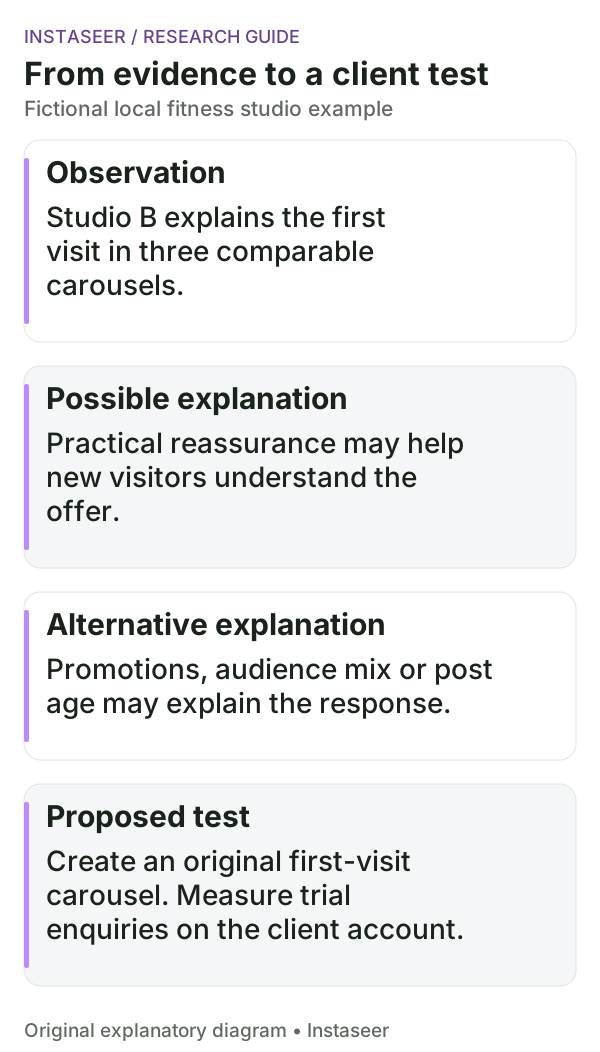
5. Turn the findings into three practical tests
Keep the recommendation small enough for the client to execute. Each test needs an original idea, a responsible person, a review date and an outcome the client can actually measure. For example:
- Answer the first-visit question. The strategist briefs an original carousel covering the client's arrival experience. The client tracks qualified trial enquiries using its own records.
- Show the experience. The production lead makes a short walkthrough using the client's own space and approved participants. Review completion or watch-time data only if the client supplies it, alongside enquiries.
- Clarify the next step. The account manager tests a clear booking instruction on comparable posts. Keep the offer stable where possible and review authorized booking or click data after the agreed observation period.
These are proposed tests, not guaranteed improvements. If the client cannot measure the intended outcome, fix the measurement plan before treating public likes as a substitute for business results.
Copy this client-ready brief structure
Decision: What should the client decide after this review?
Accounts: Client + peer, with the reason for selecting the peer.
Scope: Observation dates/timezones; returned and selected posts.
Metric: Definition; eligible counts; exclusions.
Finding: One concrete observation, with source links.
Interpretation: Why it may matter to this client.
Alternative: Another plausible explanation.
Tests: Three original ideas, owners, outcomes and review dates.
Unknowns: What the evidence cannot establish.
Use the competitor report template for the wider handoff. Keep the research method and evidence with the brief rather than sending a ranking with no explanation.
Questions agencies should settle before delivery
Is a free comparison enough for a client audit?
It can support an initial hypothesis if its returned sample answers the question. A sample of up to 25 posts per account cannot establish a full monthly history, long-term trend or complete campaign inventory. State when deeper evidence is needed.
Can we call this an engagement benchmark?
Call it a selected peer comparison and specify the sample. Two accounts do not establish an industry benchmark. A percentage also needs a defined numerator, eligible post count and dated follower denominator; see the visible engagement calculator.
What should the client receive?
A clear decision, the scope note, a few inspectable source examples and three tests with owners. The useful deliverable is a brief the client can act on and question, supported by the public evidence behind it.