Compare Instagram caption length and engagement by grouping similar post formats, using a consistent caption-coding method and checking which posts have both visible likes and comments. The worked example below shows how a pooled median can point in the wrong direction. Use the coding sheet to identify a specific writing choice to test on your own account.
Use the Instagram Reels research guide for the wider evidence workflow. The caption coding described here is a manual worksheet method; it does not assume an automatic caption-analysis feature.
Choose a caption question that helps the writer
“What caption length gets the most likes?” often hides more useful questions. Ask whether the opening explains the benefit, whether instructions are understandable or whether the next step is clear. A caption may need more words because the offer requires explanation, not because the author is following a length tactic.
Choose a publication window and a relevant account or peer set. Keep each source URL and observation date/timezone. If posts come from different accounts, retain account identity rather than treating their audiences as interchangeable.
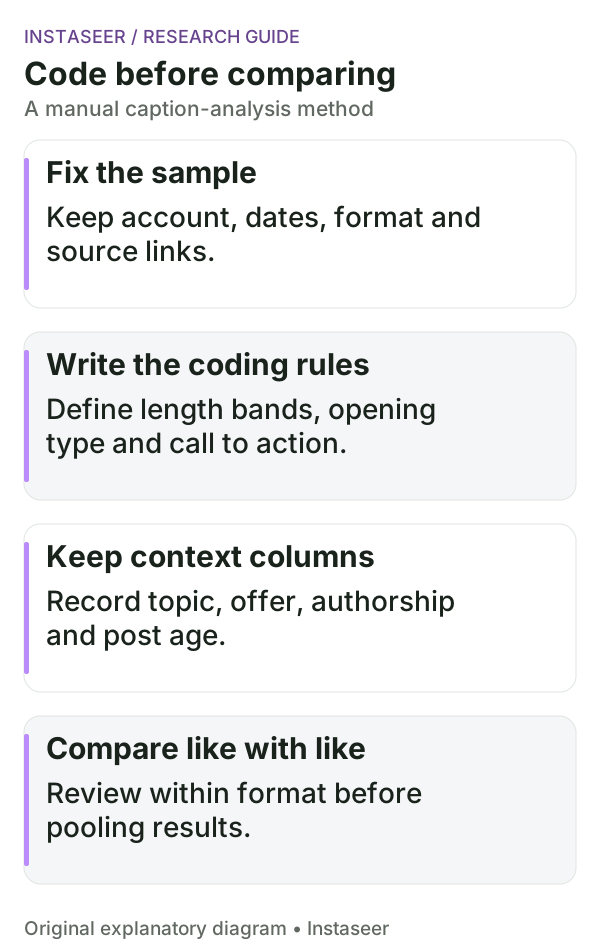
Define the coding rules before reading the metrics
For a small exercise, count words as whitespace-separated tokens after trimming the caption. Keep hashtags, mentions and standalone emoji tokens in the count, and disclose that choice. This is a reproducible counting convention, not a linguistic standard. Use the same convention for every row and record a missing caption as unavailable, not zero words.
You could choose bands of 1–20, 21–60 and more than 60 words, with empty captions separate. These are analyst-defined categories, not Instagram recommendations. Keep the original count so another reviewer can regroup the data without recounting everything.
Add a few practical labels: opening type, main audience question, call to action, offer, format and observed authorship. Define each label with an example. If two reviewers disagree about whether a caption is primarily a question or an instruction, resolve the rule and recheck comparable rows.
Keep the eligible interaction cohort explicit
When using likes plus comments, both fields must be available. Keep posts with missing components in the content inventory if they remain useful, but exclude them from the combined metric and disclose the excluded count. Do not mix views into the same total.
Check publication age as well as format. A caption on a two-month-old post and a caption published yesterday have different accumulation time at one observation. Topic and campaign context also matter: a giveaway prompt and a routine tutorial may receive responses for very different reasons.
Does your caption-length comparison hold within each format?
The following fictional set has 16 selected posts, all eligible for visible likes plus comments. They were published August 18–31, 2026 and observed September 8, 2026 in UTC. “Shorter” means 1–20 words and “longer” means 21–60 words under the counting convention above; there are no other length groups in this example.
| Group | Values | Eligible count / median |
|---|---|---|
| Shorter Reels | 80, 90, 100, 100, 110, 120 | 6 / 100 |
| Longer Reels | 105, 115 | 2 / 110 |
| Shorter carousels | 35, 45 | 2 / 40 |
| Longer carousels | 40, 45, 50, 50, 55, 60 | 6 / 50 |
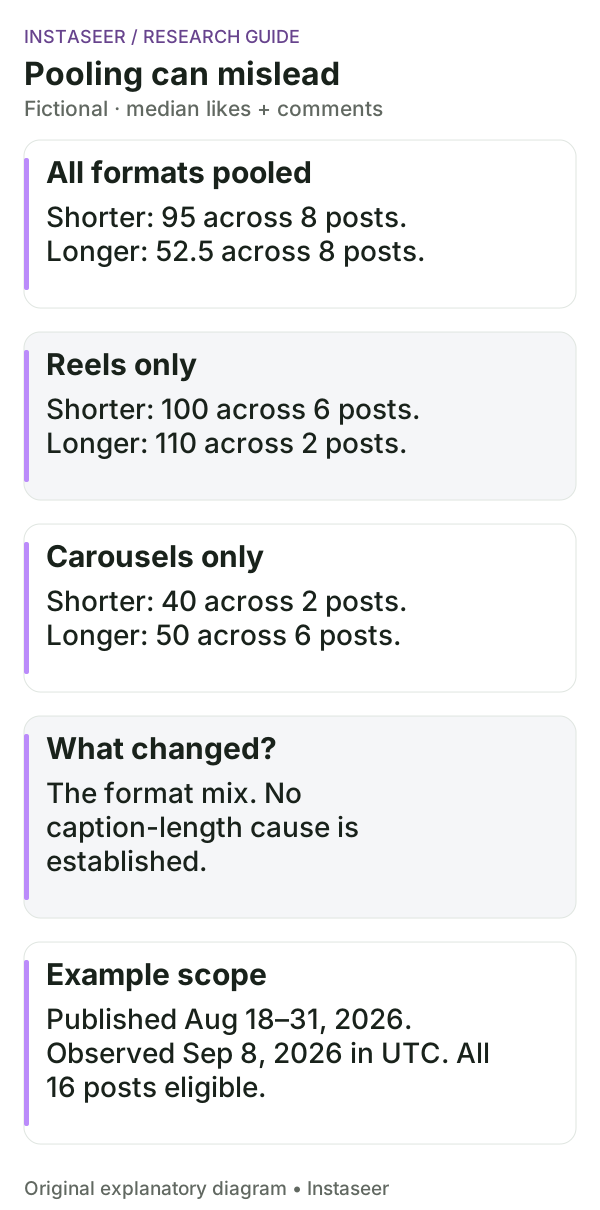
Pooling formats gives a shorter-caption median of 95: the middle pair is 90 and 100. The longer-caption median is 52.5: its middle pair is 50 and 55. A quick summary would favor shorter captions.
Within each format, however, the longer-caption group has the higher median: 110 versus 100 for Reels and 50 versus 40 for carousels. The shorter group contains mostly Reels, while the longer group contains mostly carousels. The format mix changes the pooled comparison.
This does not prove that longer captions work better either. The groups are tiny, and topic, offer, audience and distribution remain uncontrolled. The example demonstrates why the coding sheet needs context before the writer turns an association into a rule.
Read the actual captions behind the groups
Open a typical source post from each useful group and an exception that affects the interpretation. Describe the opening, the information the reader receives and the requested next step. Check whether the longer captions explain a complex offer while shorter captions accompany self-explanatory creative.
A more useful finding might be “The selected tutorials put the setup instruction before the promotional line.” That observation can guide an original writing test without claiming a universal word limit. Preserve the source examples so the recommendation remains inspectable.
Test one writing change on the client’s account
Choose a narrow change such as putting the main instruction first. Keep the format and offer as comparable as practical and use the client’s own original content. Define the outcome and observation period before comparing results. If the test also changes the product, creative and audience, do not attribute the whole result to the caption.
Caption coding sheet
Source URL / account:
Publication date / observation date and timezone:
Format and observed authorship:
Caption text available: yes / no:
Word count and counting convention:
Length band / opening type / main question / CTA:
Topic, offer and visible campaign context:
Likes and comments available: yes / no:
Combined interactions if eligible:
Interpretation, alternative and proposed writing test:
Is there an ideal Instagram caption length?
This research method does not establish an ideal caption length. Use enough text to answer the audience’s question clearly, then test specific writing choices with appropriate evidence. Inspect a public post and its caption to gather the source text, and use the manual coding worksheet to record the comparison.